Snake and Ladder
- Category: Desktop Application
- User: Personal Learning - Low Level Design
- Project year: 2020
- Technologies: Java, Swing, Algorithms, Low Level Design, OOPS concept
What is Snake and Ladder Game ?
The low-level design of a Snake and Ladder game involves breaking down the game's
functionality into smaller components and defining their interactions. Here is a simplified
example of a low-level design for a Snake and Ladder game.
1) Game Board:
- Representing the game board as a grid with numbered cells.
Each cell represents a position on the board where players can land.
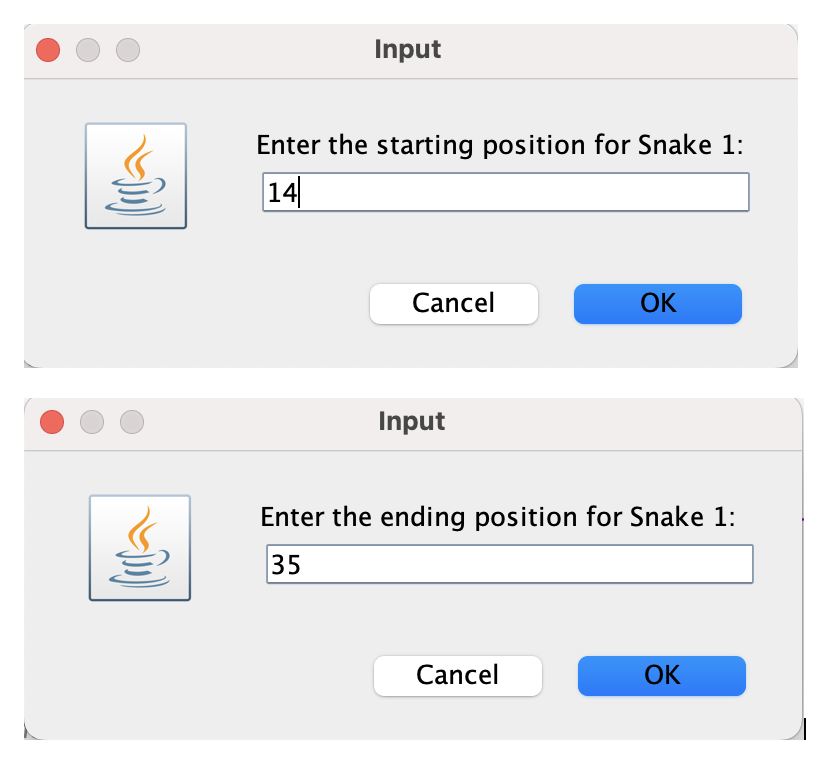
Identifying the starting and ending points of the snakes and ladders.
2) Player:
-Defining a player class that keeps track of player attributes, such as name, position, and
current turn.
Implementing methods to move the player forward based on the dice roll and handle encounters
with snakes and ladders.
3)Dice:
-Creating a dice class that simulates rolling the dice.
Generating a random number between 1 and 6 to determine the dice outcome.
4)Game Controller:
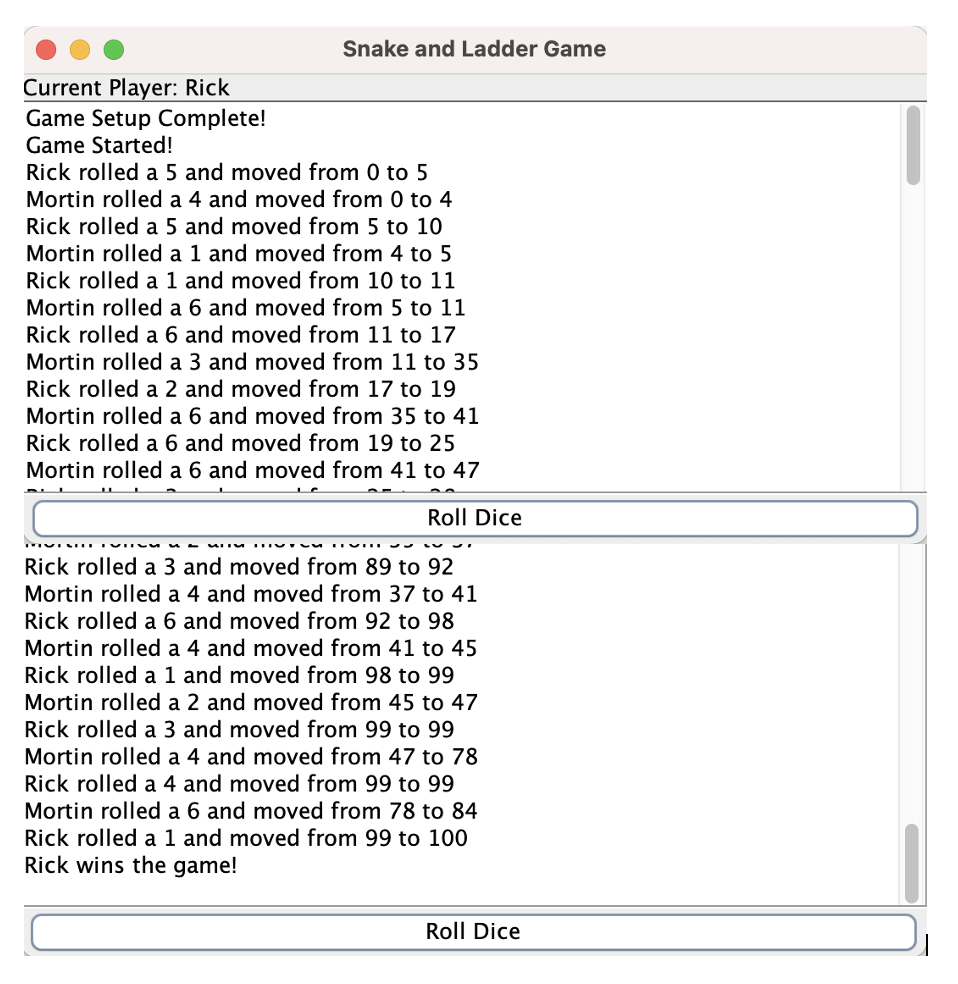
-Managing the overall game flow and player turns.
Controlling the sequence of actions, including rolling the dice, updating player positions, and
handling game logic.
Determining win conditions, such as reaching a specific position on the board.
5)User Interface:
-Developing a user interface to display the game board, player positions, and relevant game
information.
Allowing players to interact with the game, roll the dice, and make moves.
6)Snakes and Ladders:
-Defining a set of snakes and ladders with their starting and ending positions.
Implementing logic to move the player to the corresponding position if encountered.